Dance
Strength and control for dance.
An example program for someone with no injuries in the last year and no equipment. Your answers in the app shape your own.
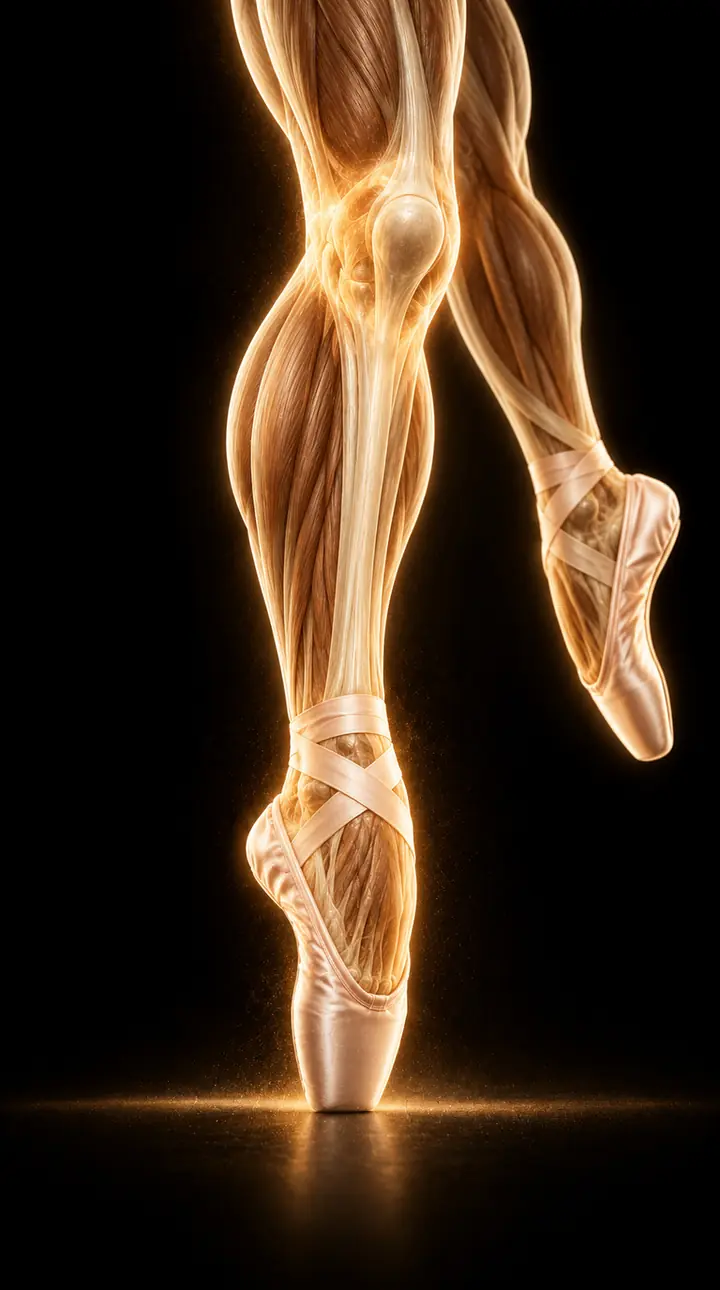
Common dance injuries
Dance injuries most often affect the foot, ankle, lower back and hip. Most are overuse problems from repeated jumps, turns and pointed-foot work, though ankle sprains from landings are common too.
What the research says
The 11+ warm-up has been adapted for dance and studied in recreational adolescent dancers. Balance training was linked with fewer repeat ankle sprains in athletes after a sprain, and foot strength training with fewer injuries in runners. See the sources.
The program
Plus a short warm-up for before you start.
Phase 1 · 4 weeks · 3 sessions a week
Foundation
Build supported balance and foot strength.
- Jump and Land
- Double-Leg Heel Raise
+6 more in this phase
Phase 2 · 8 weeks · 3 sessions a week
Build
Develop single-leg calf strength and standing balance.
- Forward and Side Hops
- Single-Leg Heel Raise
+6 more in this phase
Sources
- Lauersen et al. Strength training dose in sport: systematic review (BJSM 2018) · 2018
- Taddei et al. Foot core training in runners: randomized trial (AJSM 2020) · 2020
- Hupperets et al. Home based proprioceptive training: randomised trial (BMJ 2009) · 2009
- Versterk je enkel: 2BFit exercise card · 2015
- 2BFit trial protocol · 2008
- Harøy et al. Adductor Strengthening Programme in male football players: randomized trial (BJSM 2019) · 2019
- 11+ Dance in recreational adolescent dancers · 2023
- Jeffreys. Warm-up revisited: the RAMP method of optimizing performance preparation (2007) · 2007