Hiking
Strength and control for hiking.
An example program for someone with no injuries in the last year and no equipment. Your answers in the app shape your own.
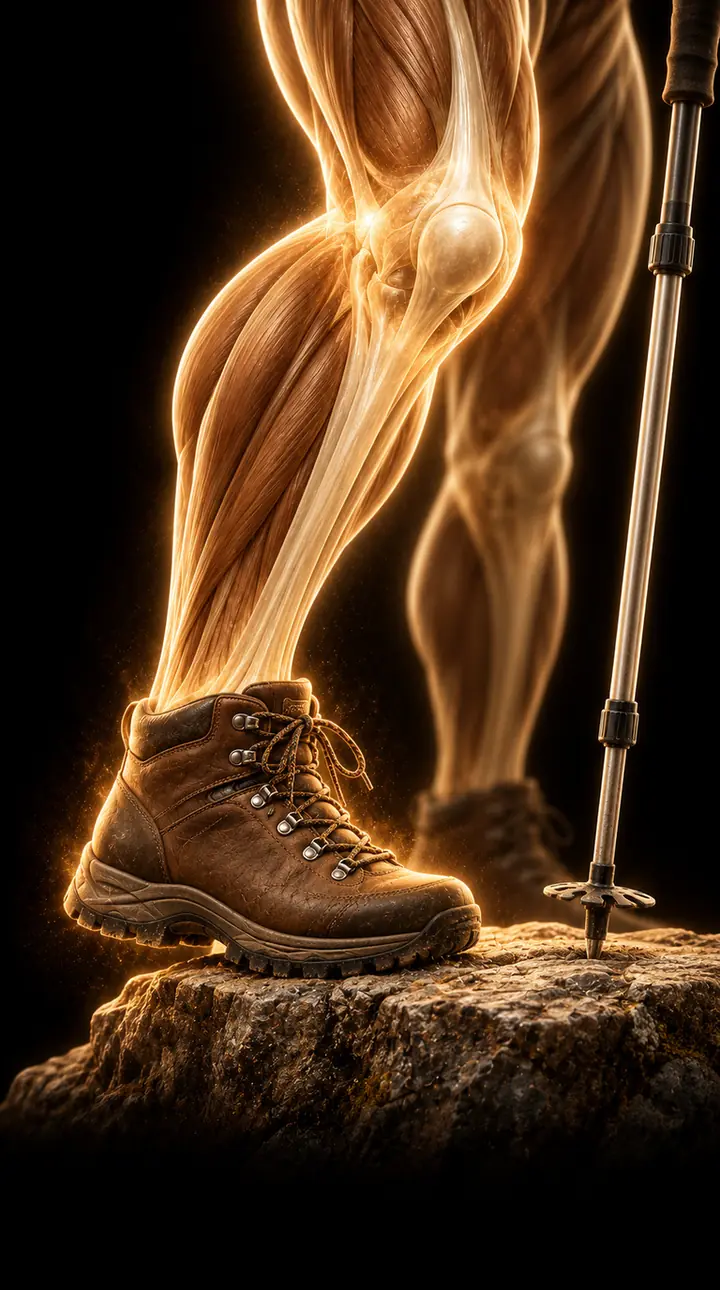
Common hiking injuries
Hiking injuries most often affect the ankle, knee and feet. Ankle sprains on uneven ground, knee pain on long descents and blisters are common, and a heavy pack adds load on the back and hips.
What the research says
Balance training was linked with fewer ankle sprains in a trial of high school athletes, and with fewer repeat sprains in athletes who trained at home after a sprain. Reviews also link strength training with fewer injuries, which supports leg and hip strength for hiking. See the sources.
The program
Plus a short warm-up for before you start.
Phase 1 · 3 weeks · 3 sessions a week
Foundation
Build supported stepping and pack-carrying control.
- Forward Step-Up
- Side Step-Down
+4 more in this phase
Phase 2 · 7 weeks · 3 sessions a week
Build
Develop descent strength and longer pack walks.
- Backpack Step-Up
- Side Step-Down
+4 more in this phase
Sources
- Lauersen et al. Strength training dose in sport: systematic review (BJSM 2018) · 2018
- Hupperets et al. Home based proprioceptive training: randomised trial (BMJ 2009) · 2009
- Versterk je enkel: 2BFit exercise card · 2015
- 2BFit trial protocol · 2008
- Harøy et al. Adductor Strengthening Programme in male football players: randomized trial (BJSM 2019) · 2019
- Balance training and ankle sprains in high-school athletes · 2006
- Garber et al. ACSM position stand on exercise quantity and quality for healthy adults (MSSE 2011) · 2011